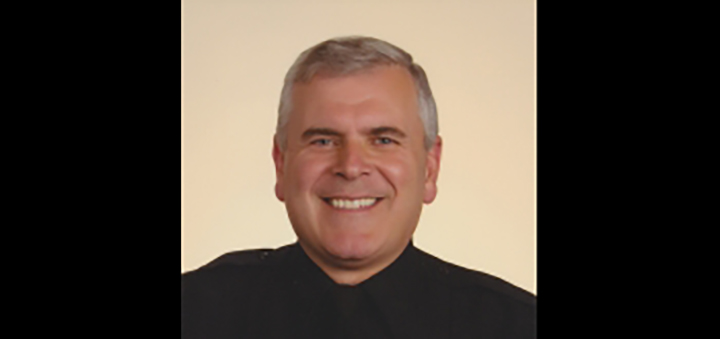
NORWICH – Chenango Links welcomed Andrew Pragacz, Public History Program Coordinator at the Bundy Museum of History and Art, on Monday for a program centered around the Ku Klux Klan in Binghamton during the 1920s.
Pragacz is the editor of "The Forgotten Kapitol: The Ku Klux Klan in Binghamton, NY, 1923-1928," which was written in the mid-1970s by Jay Rubin as his undergraduate honors thesis and republished in 2016 with the help of Pragacz.
In 2016, while brainstorming new exhibit ideas for the museum, Pragacz decided to contact Rubin about his book which led to an exhibit called "Dirty Laundry: An Unbleached History of the Ku Klux Klan in Binghamton."
"2016 rolled around and I was trying to think of a new exhibit to do," said Pragacz. "Of course things were really heating up; discussion about immigration, a larger national discussion around race and racism, so I said, 'You know what? This is the perfect time to do an exhibit on this.' And so we did, September and October of 2016; the timing was no coincidence."
Monday's program, cosponsored by the Chenango County Historical Society, was well attended with over 60 people at the Bohemian Moon to hear Pragacz's presentation about the second of the three Ku Klux Klans, which existed in the 1920s following World War I.
"The social base was middle class Protestant white men," said Pragacz. "We tend to think of the Klan and racist ideas by and large as the product of kind of rural, uneducated, unenlightened folks. This is not what the Klan was then and arguably it's not what American racism looks like today either."
Pragacz said the second Klan first tried to form in New York City before being met with resistance and moving up to Binghamton. He said Klan members were white supremacists, Protestant Christians, anti-Catholic and anti-Semitic, people who supported prohibition, felt strongly about immigration restrictions, and were segregationists.
"After they got kicked out of New York, they came to Binghamton where they found a more receptive audience," said Pragacz. "They purchased a Klan Hall in the middle of downtown, which is now the Martin Luther King, Jr. Promenade. You can't make this stuff up."