ALBANY – In another blow to the Constitution Pipeline, a federal court of appeals has backed the New York State DEC’s denial of water quality permits for the controversial natural gas pipeline.
In 2016, Constitution Pipeline, the would-be proprietor of the proposed 124-mile long natural gas pipeline, sued to overturn NYSDEC’s decision.
With that lawsuit denied by the U.S. Court of Appeals for the Second Circuit on Friday, the project is stalled indefinitely.
In a statement issued Friday, the three-judge panel wrote that NYSDEC “is responsible for evaluating the environmental impacts of a proposed pipeline on New York waterbodies in light of the state’s water quality standards.”
The court also said it will “defer to NYSDEC’s expertise as to the significance of the information requested from Constitution, given the record evidence supporting the relevance of that information to NYSDEC’s certification determination.”
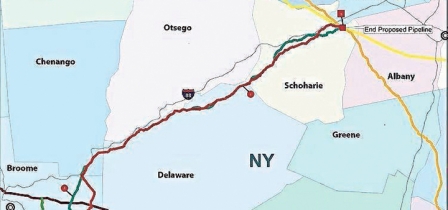
The proposed pipeline route originates in Susquehanna County, Penn., and terminates in the Town of Wright in Schoharie County, NY. The line would connect to two existing interstate natural gas pipelines at Wright: Iroquois Gas Transmission (which extends to the NYC area) and the Tennessee Gas Pipeline (which serves parts of New England).
Localities along the route, notably in Delaware and Chenango counties, planned gas distribution which proponents say would lower energy costs for area homeowners and businesses.
Constitution Pipeline says the court’s latest decision is a setback, but not the end of the line.
“The Constitution Pipeline represents a transformational opportunity for New York and New England to uplift their economies, create short- and long- term jobs, reduce energy costs for consumers and businesses and also address concerns about air quality,” the company said in a statement Friday.
The statement adds that the Second Circuit “recognized the jurisdiction of the D.C. Circuit, and the D.C. Circuit has recently acknowledged FERC’s authority to make the ultimate decision under the Natural Gas Act. While we would have preferred an immediate path to construction, we are pleased with the court’s resolution of this jurisdictional issue.”











