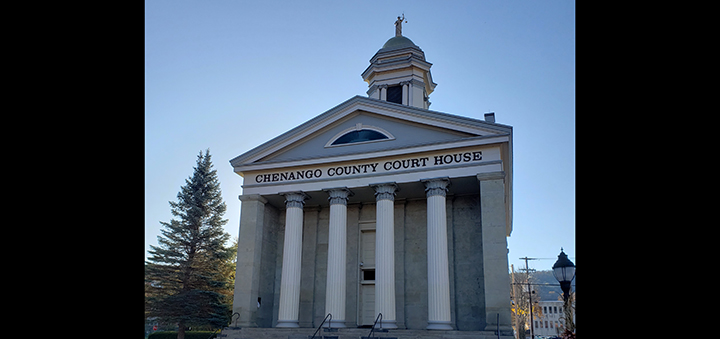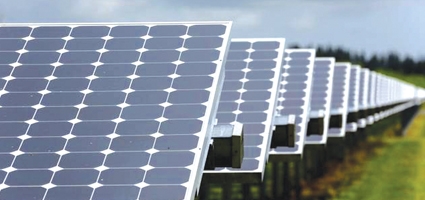
NORWICH – On Friday, county leaders heard a case to enter an intermunicipal agreement with the City of Norwich that could result in the installation of solar energy panels on a piece of county-owned property in North Norwich.
The proposed 26-year agreement would allow the City of Norwich to lease the unused gravel pit adjacent to the county landfill on Route 12 in the Town of North Norwich. The site would house an array of solar panels that Norwich officials say would save city taxpayers tremendous amounts in energy costs.
The city has been investigating a possible solar project since August, when the Common Council learned of grants available through the New York State Energy Research and Development Authority (NYSERDA).
While not in any official agreement, the Norwich Common Council has passed a resolution authorizing the mayor to begin negotiations with SolarCity, an energy service provider specializing in solar power technologies. SolarCity was the low bidder on a Request for Proposal (RFP) sent out by the city back in May to design, build, finance, and provide a solar system to be utilized by the City of Norwich.
NYSERDA incentives would help offset the expense of constructing a solar site and contracting with SolarCity.
But the city needs a viable site; and since there is none within the city itself, the Common Council is considering alternative locations. Energy produced on site – wherever that may be – would be pumped into the energy grid, and the city would receive a credit for every watt that’s generated. That credit could then be used to lower electric costs on municipal buildings, including City Hall, the Norwich Police Department, the city DPW, and the firehouse.
Because solar equipment would be owned and operated by SolarCity, Norwich taxpayers wouldn’t be responsible for upkeep and maintenance. The city would pay only for energy that’s produced.
If the county agrees to the city’s proposal, it would receive 2.5 cents per kilowatt in return. What’s more, SolarCity guarantees that if energy productions do not meet projections within a five-year window, they will pay the difference in cost.