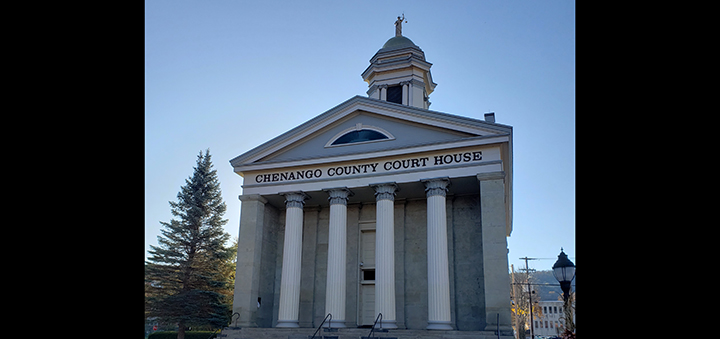
CHENANGO – Helping Chenango County residents foot the bill for community college is coming at a greater expense this year than county officials had planned.
A resolution adopted by the Chenango Board of Supervisors this month authorizes an additional $61,289 to be transferred to what’s budgeted for community college chargebacks for 2015 – and county bookkeepers are expecting an additional $150,000 transfer by the end of the year.
In October, Chenango County was issued community college chargeback rates set by SUNY for the 2015-2016 academic year. Those rates establish a guideline for county officials to plan a budget for the coming year.
The challenge is that community college rates have been unpredictable in recent years. In fact, the average community college tuition rate per student fell from $2,653 in 2009 to $2,162 in 2012. But since then, rates have climbed from $2,645 in 2013, to $2,913 in 2014, to $2,932 in 2015.
Those increased costs in higher education compound the fact that more residents are choosing to enroll at a community college, explained Chenango County Treasurer William Craine.
“The economy got bad and people started going back to school. Overlay that with the increasing cost of higher education, and you can see how chargebacks are having an affect on our budget,” Craine said.
What is a chargeback? Community colleges in New York are funded by three sources: the state, the counties and students. When a Chenango County student attends a community college outside the county, Chenango taxpayers are responsible for paying a portion of that student’s tuition, also known as a “chargeback.”
When the concept was designed in the 1960s, community college costs were split evenly three ways. One-third of the cost was paid by the county, one-third by the state, and one-third by the student.
“That original formula isn’t what it used to be. What’s happened now is that it’s more like 40 percent for the county, 40 percent for the student, and 20 percent for the state,” Craine said. “It’s kind of a switch in cost so that the more people who go to community colleges, the larger the burden is on us.”