NORWICH – Two local entities charged with increasing the fluency of adult literacy are joining forces to offer training for those willing to tutor area adults.
Having the most basic ability to read and write is increasing vital with each passing year. In an era of instantly available information accessible though the internet, a greater emphasis is placed on literacy in today's society.
While ample recourses are available for implementing literacy fundamentals in youths through the public education system, the same cannot be said for adults who, for whatever the reason, were unable to grasp fluent reading and writing as a student.
In light of that, Literacy Volunteers of Chenango County (LVCC) calling on the commnity to increase its staff of volunteers to tutor adults across Chenango County. Collaborating with Literacy Volunteers of Otsego/Delaware County and Literacy New York (LNY), LVCC strives to provide much-needed resources though joint tutor training.
“The general public would be astounded if they were aware just how many members of our community were unable to perform tasks as simple as reading the warning label of a medication or filling out paperwork at the DMV,” said JoAnn Kishbaugh, Director for Literacy Volunteers of Chenango County at Opportunities for Chenango in Norwich.
Many adults across the country cannot read a book or newspaper, fill out a job application or read to their children. According to 2013 U.S. Census estimates for Chenango County, 15 precent of people aged 25 and over lack a high school diploma; 12 percent lack basic literacy skills.
The Literacy Volunteers Tutor Training features a 12-hour workshop that includes a series of dynamic, hands-on and eye opening sessions that prepare tutors to recognize and address the needs of their assigned student. Each session is filled with interesting, relevant, and useful tutoring techniques and strategies which tutors can apply in their work with student.
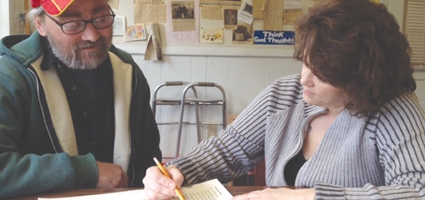
“Both newly trained and experienced tutors are rewarded with feelings of satisfaction and a sense of accomplishment for their hard work,” said Kishbaugh. “One of our new tutors, Julie Beth Holdrege initiated a program where she meets with her student at his workplace; they do their tutoring sessions there during his break/lunch time,” she added.
According to Kishbaugh, literacy has a direct impact on an individual's economic self-sufficiency. To qualify for a job with a family sustaining income, adults need at least a GED or diploma plus some post-secondary education or training, which require the ability to read and write.