NORWICH — Training is underway, and soon everyone in the patrol division at the Chenango County Sheriff’s Office will be trained in administering a drug — Narcan — that could potentially stop a death by overdose.
According to the Center for Disease Control and Prevention, a person dies every 18 minutes from a drug overdose, and nearly three-quarters of those are overdoses of prescription painkillers.
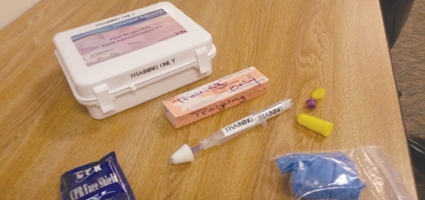
CCSO Undersheriff Daniel Frair trained a half-dozen employees Monday on the basics of Narcan, how to administer the drug, and the necessary information one needs to know in order to possess the kit and potentially save a life.
When prescription painkillers — such as oxycontin, oxycodone, hydrocodone, morphine, fentanyl — are no longer available or affordable on the streets, individuals may turn to heroin. These drugs are opiates.
Narcan, which is pharmacologically referred to as naloxone, works as an opioid antagonist, and is used to reverse the effects of an opioid during a suspected overdose.
While EMS employees have been using Narcan in the injectable form nationwide for years, the CCSO will be training its employees to administer the drug through the nose when an employee encounters a suspected opiate overdose.
According to reports provided at the CCSO training, 1,848 people died in New York state in 2012 as a direct consequence of a drug overdose. Between April 2006 and December 2013, 850 overdose reversals were reported to New York state by responders in registered programs, and as of April 2014, there are 130 registered programs in the state.
As law enforcement officials are sometimes the first on the scene of situations of potential overdoses, those individuals are being trained on how to reverse an opioid overdose.
“This will allow us to be better prepared to assist the public,” Frair said.
Throughout the training, the undersheriff showed video of two law enforcement officers from different but nearby areas discussing their encounters with administering Narcan to overdosing individuals.
Frair reminded those participating in the training Monday that Narcan is appropriate to administer to people of all ages, including children. He asked those in the room to think of children who may accidentally consume pills, elderly who may have taken too many because they had forgotten they’d already taken their dose for the day, and teens who may have been curious and taken pills they should not have consumed from their parents’ medicine cabinets. Those at risk of overdose additionally include former drug users who have abstained for years, and then use today, when drug potency is higher.
“We do really need this,” Frair said.
The signs of someone in need of Narcan include unresponsiveness, slow breathing or the absence of breath, gurgling, and/or a blue or ashen color.
“There is no time to waste,” Frair said. “When you get there, react.”
Narcan is painless when administered into the nasal cavity, added Frair. He said there is easy access to the nose, and the risk of a law enforcement employee being contaminated by a needle-stick is eliminated (as compared to intravenous Narcan).
Those in training learned that Narcan will work for approximately 30 to 90 minutes. The information provided related Narcan’s effect on the brain to “stealing the parking space” of the opiates.