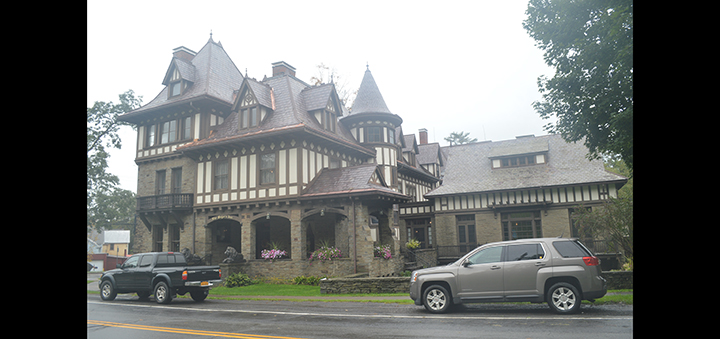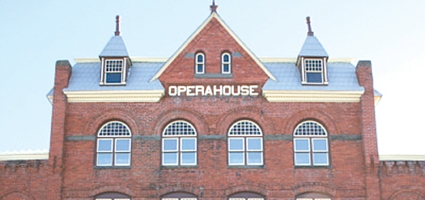
ALBANY – The Preservation League of New York State has awarded a Technical Assistance Grant (TAG) to a group directly engaged in the stewardship and public use of a historic building in Chenango County. A $3,000 grant to the Earlville Opera House will support the cost of an engineering structural analysis of the National Register-listed performing arts venue.
The Earlville Opera House has served as a focal point for community activities and the arts since 1892. Through the early 1920s, the Opera House provided a stage for live entertainment such as vaudeville acts, three-penny operas, and travelling medicine shows. Later, it was converted to a silent movie house, and then took on the role of public auditorium, hosting high school graduations and town meetings. But the curtain came down in the 1950s, and in 1971, the building was slated for demolition.
The not-for-profit Earlville Opera House, Inc. formed, took ownership of the building, and began restoration work immediately. Since then, the organization has fulfilled a dual mission: to provide the highest quality arts, cultural and entertainment events to their rural constituency; and to renovate and rehabilitate the Opera House's historic theater.
With charming stenciling, ornate pressed-tin ceiling and proscenium stage, the Opera House is one of few remaining examples of a building type that was once common in the area. However, the lack of climate control requires that the theater be closed during cold weather. In addition, dramatic seasonal changes in temperature and humidity are taking a toll on the auditorium's wood floor, upholstered seating and plaster walls, as well as a 1893 Chickering baby grand piano.
TAG funds will support updated analysis of the existing conditions at the Opera House, heating and cooling loads, and identification of costs and benefits of climate control options. Taitem Engineering of Ithaca will complete the analysis, which is an essential step in the installation of an energy-efficient heating and cooling system while preserving the building's architectural integrity.
"We are deeply grateful for this opportunity to begin the next step for this historic building that was once almost torn down and turned into a parking lot," said Patti Lockwood-Blais, executive director of the opera house. "A great deal has been invested both in terms of financial and volunteer resources in the Earlville Opera House since then. On behalf of all our artists and patrons, we are very excited about bringing the building into the twenty-first century. The study will help us to plan changes that will greatly expand the programming that we can offer the community."