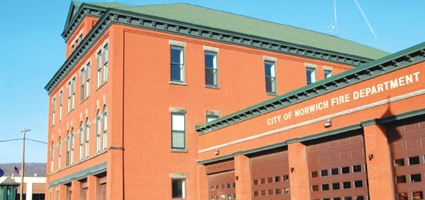
NORWICH – Citing deteriorating conditions of service vehicles at the Norwich Fire Department and mounting pressure to maintain emergency services for city residents and contracting townships, the Norwich Common Council on Tuesday approved purchase of two used ambulances and one used fire truck to add to the NFD fleet.
The City council voted unanimously to purchase the three vehicles at a cost totaling $109,000 ($37,000 for an ambulance from the Eaton, NY Fire Department; $23,500 for an ambulance from the Mattituck, NY Fire Department; and $48,500 for a fire truck from the Huntington Fire Department in Phillipsburg, NJ). According to Norwich Fire Chief Tracy Chawgo, purchasing the vehicles is the most cost-effective way to keep NFD's fleet up to par.
The Common Council proposed money for both ambulances be drawn from the city's ambulance equipment reserve fund, which currently stands at $89,800. The new fire truck – a pumper engine – will be purchased via funds from the city's general budget with additional money raised by selling the department's current pumper engine as surplus.
“We've had a lot of problems with one of our ambulances lately,” Chawgo told city council members at a special meeting held Tuesday. The ambulance, a 2007 Ford model, has a blown engine in need of nearly $6,000 in repairs. That on top of approximately $10,000 in repairs made to the same ambulance over the last three years, said Chawgo. The ambulance has been out of service for nearly three weeks, reducing the NFD's ambulance fleet from three vehicles to two.
Added Chawgo, “Right now, we're basically losing calls every day.” Lost calls means a decline in services provided as well as lost revenue in ambulance recovery fees, he explained. “The ambulances are really the workhorse of the department. When we're down to two, it hurts us. We just don't have the number of vehicles to handle the calls.”
NFD generated nearly $650,000 in revenue from ambulance recovery fees in 2013 and is budgeted for $652,000 in revenue for 2014. Ambulance calls bring in approximately $3,000 every week, Chawgo noted. The department says missed calls in recent weeks has resulted in an estimated $10,000 in lost revenue.
The department claims the number of ambulance calls received in recent years have increased significantly, thanks in part to an aging local population, greater need for mutual aid, and the 2007 withdrawal of Superior Ambulance from the area.











