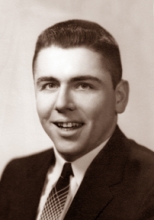
By Steve Griffin
Contributing Writer
Editor’s note: Today’s article is part two in a series of profiles on this year’s Norwich Sports Hall of Fame induction class. The Hall of Fame banquet is scheduled May 11 at Canasawacta Country Club. Reservation forms are available at Wells Fargo Advisors, the Norwich YMCA, and Norwich City Schools.
In the 1930s and ‘40s, childhood was a wonderful time for most children. However, for some, a viral disease commonly known as polio resulted in the often permanent loss of motor ability in the arms or legs, and for those whose ability to breathe was affected, death. Norwich, like other communities, saw several of its athletes crippled by the disease, which was thought to spread in locker rooms and swimming pools. In 1946, Norwich’s football season was cancelled after three games because of the polio epidemic.
Imagine what it was like for nine-year-old Fred Swertfager to awake one morning to face the physical, psychological, and emotional challenges of partial paralysis of his legs due to the dreaded disease.
By the age of ten years, Fred was fitted with large boots and special braces to aid his weakened legs. A deep feeling of self-consciousness filled him. He was embarrassed to be seen. This young boy loathed the very things designed to help him stand and walk. All he wanted to do was run and play with his friends. While falling asleep, thoughts of adventures in a make-believe world were replaced by a frightening dread of what tomorrow would bring.
Through support of his parents and neighborhood buddies, Fred continued to play ball. When it came time for Little League tryouts, he was so self-conscious of his braces and boots he decided not to try out. However, his friends coaxed and encouraged him not to give up hope. So, he went to tryouts.
Fred was chosen by Ang Mirabito and Fenton Pooler, coaches of the Moose Club team. These men saw something beyond the boots and braces. They saw a determination to succeed. They saw an unwillingness to give in to monumental challenges. They also saw a raw talent that needed development.
Coach Mirabito and Coach Pooler worked with Fred, and soon learned the determination to succeed was stronger than they had sensed. They put him on the mound, and his pitching career began. He pitched the first three games. After the third game he made a decision. He removed the hated boots and braces and threw them away. He told his mother he was all done wearing them. His determination grew, and at the end of the season Fred pitched the Moose Club to a Little League championship.
After Little League, Fred tried out for Kiwanis. He was chosen number one by one of his favorite coaches of all time, Don Collier. Coach Collier told his young team, “Boys, we are going to take a beating the first year, but we’ll win after that.” True to his words, the team “took a beating” that first year. Then, they won everything for the next three years.
Very early in Fred’s final Kiwanis season, it became clear his level of pitching was far superior to opponents’ skills. Coach Collier arranged a meeting with Dewey Thompson and Bob Ryan, managers of the Polkville Giants. As a result of that meeting, Fred became the Giants’ number one pitcher. The Giants played in a fiercely competitive town-team league. Many teams had paid professionals on their rosters. These men were in their twenties and thirties. Fred was fourteen years old.
After a successful summer of town-team baseball, it was time for high school. As a freshman, Fred threw a five-hitter in his varsity debut win. He had impressive outings the entire season. He struck out ten batters in a one-hit shutout over Ilion. He threw another one-hitter versus Sherburne, striking out 14. He tossed a three-hitter in a shutout win against Oneonta. He finished his freshman season with a win-loss record of 6-0, striking out 45 along the way.
In his sophomore year, Fred registered his first no-hitter, this against Little Falls. His lone loss that season was against Oneonta despite giving up only three hits and striking out 13. He redeemed himself the next game versus Herkimer. He struck out 14 in another shutout victory. He finished the season with a 4-1 record. He put up almost unheard of pitching statistics, with an ERA for the season of 0.637 and a WHIP (walks and hits per inning pitched) of 0.545. He averaged 1.68 strikeouts per inning and .09 walks per game.
Fred, in his junior year, continued to blow strikes past batters. His ERA was 0.757 and his WHIP was 0.541. He averaged 2.08 strikeouts per inning and .046 walks per game. He threw a no-hitter versus Herkimer while striking out 14. In an 86-pitch no-hitter against Ilion, he struck out 18. He struck out twelve in a one-hitter versus Oneonta. He struck out fifteen in a two-hit win over Herkimer. He finished the year with six wins, and his teammates elected him and fellow pitcher Charlie Townsend co-captains for the 1956 season.
Fred was again dominant in his senior year. He threw an extremely efficient 82-pitch no-hitter against Vestal striking out 18 en route. He and Townsend combined for a no-hitter, with Fred pitching four innings and Charlie three. He struck out 14 in a one-hit shutout over Oneonta. It was later changed by the official scorer to a no-hitter, making 4½ career no-hitters. His high school performances enticed major league scouts to visit Norwich and Fred’s family.
Fred was also an outstanding basketball player. In 1953, his freshman season, he set a new JV scoring record of 239 points. The only freshman starter, he received the Russell Skahan trophy as most valuable player.