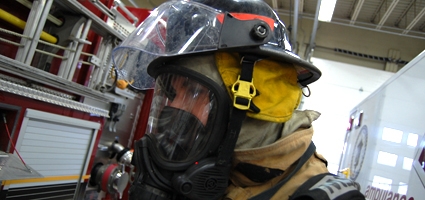
There’s a lot that can be said of anyone willing to run toward a burning building while everyone else is running away. As much can be said of someone who will drive and ambulance through busy intersections of a main street when you need help the most. Truth be told, I have always had nothing but admiration for local firefighters and EMTs, so a tag-along with the crew at the Norwich Fire Department for this week’s Punching the Clock was nothing short of an honor for me.
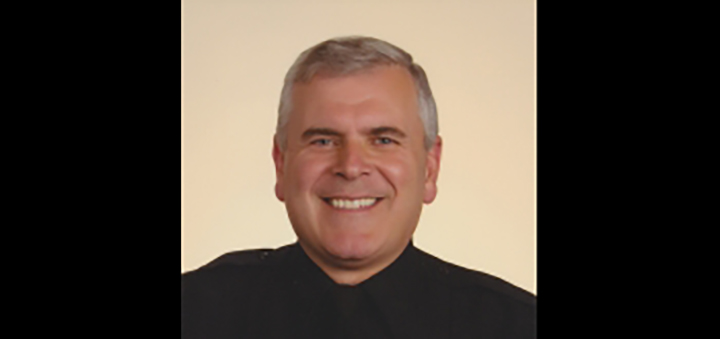
“A lot of people dont’ really realize just how much we do here. You never know when a call is going to come in or what it’s going to be,” explained NFD Chief Tracy Chawgo, referring to the department’s two-fold operation of fire and EMS responsibilities. The department currently staffs 15 full-time employees and four part-time, with additional help from countless volunteers. “We’re too busy to be all volunteer, but too small to be all paid. We couldn’t do what we do without those volunteers,” he said.
My shift started shortly after 10 a.m., almost four hours after the regular crew reported for duty. Chief Chawgo turned me over to Steve Cady, one of the EMTs on staff that day. In the world of EMTs, Cady has more than enough experience to boast, serving with the City of Norwich as well as the Chenango County 911 dispatch center. Cady had all of two minutes to give me the run-down of the day-to-day operations at the fire station when an emergency call came in, reaffirming Chawgo’s statement that you never know what to expect.
I jumped in the back of one of the three ambulances stationed at NFD, along with volunteer Zach Maricle. “About 80 percent of all our calls are EMT related,” Cady called from the front seat as the ambulance turned out of the fire station onto East Main Street. “And it’s not unusual to have another call while we’re out.”
Last year, the Norwich Fire Department responded to more than 4,000 calls in its district, most of which were EMS related. The ambulance district covers the City of Norwich as well as the Town of Norwich, North Norwich, Plymouth, Preston and Pharsalia.
The ambulance stopped at a house in downtown Norwich, where a senior citizen, who lived alone, had fallen during the night and remained on the floor, helpless for nearly six hours until responders came. The call came from a friend who was going to drive the two to a hair appointment that morning.
EMT’s comforted her and transported her from her home to the ambulance parked on the curbside in a routine that has become second nature to them. I climbed in a second ambulance that had also reported to the scene as a precautionary measure, and the other ambulance took the patient to UHS Chenango Memorial.
On the way back to the station, another call was dispatched before the ambulance reached the end of the street. From the back of the ambulance, I could make out only blips of the dispatcher’s jargon: “Male patient ... CIT ... difficulty breathing ... unresponsive.”
“Unresponsive means he may not be breathing,” Maricle told me while he gathered medical gear and the ambulance sped down the center lane of South Broad Street, siren blowing and lights flashing.