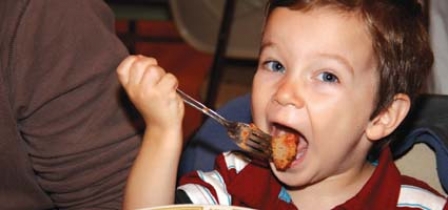
NORWICH – Although no one seems to be quite certain of when the St. Bartholomew’s spaghetti dinner originated, the annual pasta feast has proven to be a heavily anticipated event for organizers and community members year after year. Hundreds gathered at the East Main Street Msg. Fest Parish Center to dine on an Italian custom plate full of spaghetti and meatballs last night and hundreds more are expected to attend tonight as the church hosts the second evening of its beloved ritual.
“This has been going on for a long, long time. We think it’s close to 65 years now,” explained Nan Magistro, a longtime member of St. Bart’s spaghetti supper committee. “It’s one of those things that everyone really looks forward to every year.”
The time-honored feast, also assisted by parishioners of St. Paul’s, spans two nights and with the help of more than 100 volunteers offering to prepare, cook, clean, serve and entertain guests, there’s no shortage of hands to attend to the expected 1,000 guests this year, Magistro said. “We’re very thankful for those volunteers,” she added. “If we couldn’t get enough volunteers, we wouldn’t be able to run this.”
As guests trickled in and out, Father Ralph Bove was quick to recognize the amount of community support that upholds the banquet every year. Since Sunday, the committee has been hard at work, making nearly 2,000 meatballs from 200 pounds of beef. This year, cooks are using more than 200 pounds of pasta and more than 60 gallons of sauce to feed hungry crowds. Although many volunteers have been part of the tradition since it first began in the basement of the St. Bartholomew church in the 1940s, Magistro was happy to say that more youth are getting involved in the feast, too. “It’s a great way to keep the event going,” she said.
The dinner is the church’s second largest annual fundraiser benefitting the parishes of St. Bart’s and St. Paul’s, outdone only by the annual Italian Feast Day held in August. “We’ve tried to hold a spaghetti dinner in February too,” Magistro explained, but weather was often a factor that kept many area diners from making it to the Parish. “We decided that it was best to keep it around Columbus Day,” she said.