NORWICH – Is Chenango County an oasis for welfare recipients?
The perception is out there. It’s been the undercurrent of opinion for a long time that the Land of the Bullthistle is some how the Emerald City of social services payouts. Even some county supervisors have been under the assumption, and said so recently.
The rumor is wrong if you ask Department of Social Services Commissioner Bette Osborne and her staff. While the public assistance population is known to move from county to county, Chenango isn’t within proximity of major metro areas where rent subsidies are more attractive and where services, such as transportation, are more readily available, she said.
“People in need of support don’t normally choose rural communities like ours,” she said.
Another misperception is that welfare collectors move out of the county once their assistance dries up, only to re-enter to start back at the highest level. It doesn’t work like that, the commissioner said. The welfare system begins with the delivery of public assistance (food stamps, Medicaid, and emergency loans) for a period of five years, followed by cash assistance (whether for individuals or families) for two more years. If support is still needed after that, DSS will continue to pay client’s bills directly to vendors, such as landlords, for an indefinite period of time. Welfare recipients who leave the county and return later must start wherever they left off.
Furthermore, computer systems track recipients statewide so if they move without accepting employment opportunities in one county, for example, that information follows them to the next, sanctioning their ability to collect.
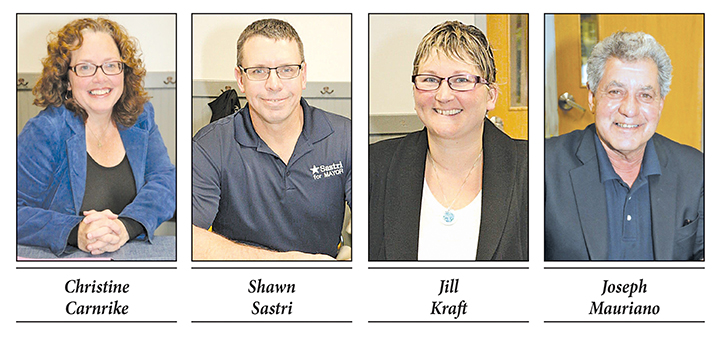
Nevertheless, political newcomer City of Norwich supervisor Robert M. Jeffrey has continued to dig through the details of the county’s social services system and ability to prevent fraud. His questions began with DSS’ request to outsource for fraud assistance earlier this year when the amount of uncollected debt owed to DSS reached $1 million. It continued with the department’s annual report revealing a 66 percent increase of the number of individuals on foods stamps and two-thirds of the 350 families receiving assistance reaching the final vendor-pay level. About 20 percent of the county’s population qualify for food stamps and Medicaid. Paying for the latter takes up all but a small fraction of the county’s property taxes.
The discussion at a recent meeting of the Health and Human Services Committee was rent subsidies. In
keeping with his campaign promise to clean up the housing stock within his district, Supervisor Jeffrey asked whether DSS was required to inspect potential living units prior to granting clients rental assistance. He said multiple family members and friends are living in units that are too small or unfit for the number of people and some have become havens for drug dealers.
“We are paying out money to make sure that people are getting proper shelter. Why can’t we make sure they are proper?” he asked.
Jeffrey’s inquiry follows a controversial City of Norwich Common Council decision last month to impose a $25 inspection fee on landowners every time a rental unit changes tenants. New York State law already requires an inspection every three years on apartment buildings or houses with three or more rental units.
No such pre-inspection authority rests within DSS, Jeffrey learned, and even if a welfare client receiving rental assistance asks their caseworker for it, or the Board of Supervisors authorizes additional staff time to do it, the practice might result in what Osborne called “a double-edged sword.”