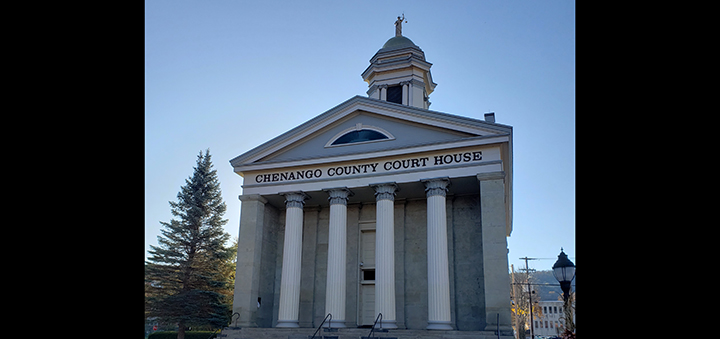
CHENANGO COUNTY – With the legislative session drawing to a close, members of the criminal justice system are advocating for the passage of a bill they say will make it easier to solve crimes.
Introduced in the senate by Senator Stephen M. Saland, who represents New York’s 41st Senate District, the All Crimes DNA bill would require anyone convicted of a crime to provide a DNA sample. Currently, only those convicted of certain crimes are required to do so. According to advocates, those constraints limit law enforcement’s ability to use DNA evidence to solve crimes, as well as exonerate those who have been wrongly convicted.
Chenango County District Attorney Joseph McBride is one of those advocating for passage of the legislation, which was approved by the Senate on June 16 and now awaits Assembly approval.
“From a public safety perspective, there is no logical reason we shouldn’t do this immediately and no good reason it hasn’t been done before,” McBride said.
The prosecutor cited a DCJS Study of the DNA Databank, which showed 2,485 crimes could have been solved more than five years sooner if this legislation had already been enacted.
According to McBride, the value of DNA evidence cannot be overstated. As an example, he pointed to a 2009 case in Chenango County. In June of that year, the manager of a Bainbridge convenience store reported that a donation can containing approximately $50 was missing. The man responsible for the crime was identified as Joey Bethea. When Bethea was arrested it was discovered that he owed a DNA sample for a previous petit larceny conviction. That sample linked him to 20-year old unsolved rape and murder of a young Haitian woman in Nassau County for which now, thanks to DNA evidence, he is now serving 25 years to life.
“The collection of that very important evidence made our own community a safer place,” he said.