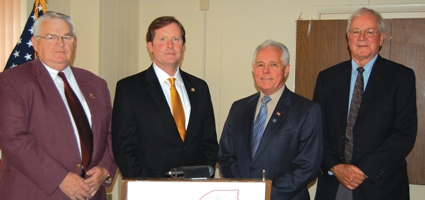
NORWICH – A tax cap, ethics reform and marriage equality are at the top of Governor Andrew Cuomo’s legislative agenda, according to Matthew Driscoll.
The former two-term Syracuse mayor, now the president and CEO of New York’s Environmental Facilities Corporation, was in Norwich last week to meet with elected officials and business leaders at Commerce Chenango.
“Today, I’m really carrying an important message from the governor,” said Driscoll, whose visit last Friday was part of Cuomo’s People First Campaign.
According to Driscoll, Cuomo has already delivered on one of his campaign promises: passing a budget.
“The budget was honest, it was balanced and it was on time,” he said, applauding Cuomo for closing the state’s $10 billion budget gap without borrowing or raising taxes.
Now, he explained, the governor has moved on to the second phase of his action plan for New York.
According to the state official, Cuomo has three priorities for the remainder of the legislative session. The first, he explained, is to stimulate the economy, which he proposes to do by instituting a tax cap. The second, to “clean up Albany” through ethics reform; and the third, to “return New York’s legacy of social progress,” by supporting marriage equality.
“Job one is to get the economy running,” he reported, explaining that the governor’s plan is to “level the field” for businesses by reducing the cost of government and reining in taxes.
According to Driscoll, New York’s property taxes have caused an “exodus” of businesses and families from the state.
“We cannot continue to move forward if we are the tax capital of the nation,” he said, explaining that the average New York tax bill is 92 percent higher than the median. “We need to impose fiscal discipline.”
Cuomo’s answer is to implement a tax cap. Under the proposed policy, schools and municipalities would be prevented from raising the tax levy more than two percent or the rate of inflation, whichever is less. Certain exceptions would apply, such as for capital projects and state mandated social services. And Driscoll stressed that communities would be able to override the cap, given 60 percent of voters approve.
Driscoll pointed to Massachusetts as an example of how a tax cap policy could help drive economic growth.
“It’s really not what you spend; it’s what you achieve,” he said. “Performance matters ... results matter ... accountability matters.”
He also talked about education.
“The return on investment is woefully inadequate,” he said, pointing out that New York is first in spending but 34th in results when compared to other states. Even though enrollments have been on the decline for the last decade, he reported, both the number of teachers hired and administrative costs have been on the rise.











