WASHINGTON, D.C. – Senator Charles Schumer was thinking about pancakes Wednesday - a thick stack of pancakes, smothered in New York maple syrup.
That’s what Schumer says comes to his mind when he talks about legislation he is proposing to help New York’s maple producers tap into the full potential of the industry.
“I believe New York can become the global leaders in the maple syrup industry and I have a plan to make it happen,” the Democrat said earlier this week, as he unveiled the Maple Tapping Access Program (TAP) Act.
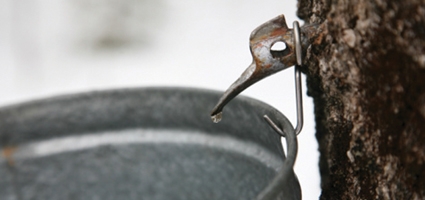
The piece of legislation would provide up to $20 million a year in grants to encourage private landowners to tap their trees as well as to fund research, education and marketing efforts for the industry.
Schumer said his plan is similar to one implemented in Canada several decades ago. Canada currently dominates the industry with 85 percent of the syrup market.
“I’m very optimistic we can make it happen,” he said, explaining his goal of having the Maple TAP Act included in the 2012 Farm Bill.
According to the USDA, New York’s 1,500 maple producers produce one fifth of the U.S.’s maple syrup, ranking third behind Vermont and Maine. In 2009, New York’s maple industry generated $17.8 million in sales.
According to Schumer, that’s only a fraction of what it could be.
“New York taps less than one percent of its nearly 300 million maple trees, leaving $82 million in potential revenues stuck in trees,” he told members of the press in a conference call Wednesday.
Vermont taps three times as many trees, and Canada twenty times that number, he said. “All we have to do is tap our trees.”
Citing numbers from Cornell University, Schumer broke down the potential revenue by region. The largest opportunity for growth is the Southern Tier, he said, in which he includes Chenango County. According to the senator, only .5 percent of the region’s more than 70 million sugar maples are tapped each year, leaving $21,915,000 “in the trees.” By his estimates, Chenango has 11,396,000 maples, only .4 percent of which are tapped, leaving $3,430,000 in untapped revenue.