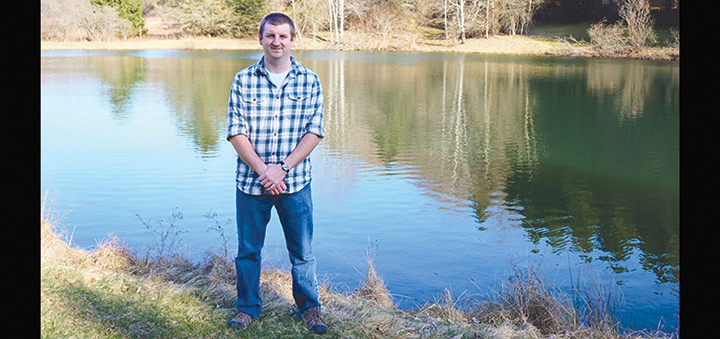
SUSQUEHANNA COUNTY, Pa. – If you want to see John Benscoter smile, ask him about the royalty checks he receives from Chesapeake Energy.
The Auburn farmer leased the natural gas rights on the 105-acre farm which has been in his family since 1837 to the multi-national energy company in the spring of 2006 for the paltry sum of $47 an acre.
“We’d never heard of Marcellus (Shale),” he said. “We had no idea.”
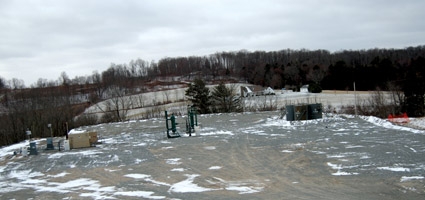
Chesapeake has yet to drill on his property, but that doesn’t mean Benscoter’s not benefiting from the Northern Tier’s natural gas boom. The farm – a working beef cattle operation – is part of not one, but two spacing units from active wells on adjacent properties.
“We received our first check in late June,” Benscoter reported, breaking into a grin which widens as he explains the checks grew larger in November, when the second well started producing.
This new-found wealth doesn’t mean Benscoter is planning to quit his day job. (Either of them, since he also works for the Susquehanna County Soil Conservation District.) Nor does he expect other agricultural producers to do so.
“Nobody is going to quit farming,” he said. In fact, he says it has allowed him to invest in new equipment and modernize his operation. According to him, his neighbors are doing the same.
“Once you start getting royalties, the weight is off your shoulders.”
Natural gas isn’t a threat to agriculture, he and others involved with advocating for the industry say. They see it as something of a salvation for the region’s long-struggling farmers.
“It’s sparking up the ag industry down here,” Benscoter said. “It saved it.”
He considers natural gas development as a form of ag preservation – and Marlene Bailey, who administers Pennsylvania’s state Agricultural Land Preservation Program for Susquehanna County, agrees.
According to Bailey, who works out of the USDA’s Natural Resource Conservation Service’s Montrose field office, a total of 27 farms representing a total of 5,711 acres of farmland are being preserved through the program.
“Every one of them has a gas lease,” she said.
Bailey said natural gas drilling is one of the few types of development allowed on properties in the land preservation program, the goals of which are to keep land in agricultural production and preserve the area’s “rural nature.”
“It doesn’t hurt the ag viability of the property,” she explained.
There is disruption while wells are being drilled, she said, but the area around the well pads can still be used to pasture animals, once everything has been reseeded. In some cases, this may actually improve the land.
According to Benscoter, landowners need to take an active role in determining where pipeline will be laid, etc.
“Don’t assume anything. The more you talk to them, the better off you’ll be,” he said, explaining that, in his experience, the companies will work with farmers to minimize disruptions.
Bailey and her colleagues, including NRCS District Conservationist Ain Welmon, all say they have seen an influx in the number of farmers taking advantage of soil and water conservation programs.
“(They are) more environmentally conscious about their farm, because they can afford to be,” Benscoter explained.
Have there been some farms which have chosen to go out of production? Yes, according to Jim Garner, who heads the Susquehanna Conservation District.