NORWICH – It’s a world away, but the tiny nation of Haiti has, sadly, been in the news nearly every day this year.
From the Jan. 12th hurricane that killed more lives than the population of four Chenango Counties, the ensuing cholera epidemic that took 2,323 more and left nearly 104,000 people sick, to the recent violence spurred by controversial political elections, the world has wept for this devastated country in the Caribbean.
The picture painted in the news and on TV often highlights the hundreds of volunteer aids and relief organizations that rushed to Port-au-Prince to erect emergency shelter, provide food, drinking water and medical care, and to clear transportation routes. Their work continues today, even amidst the opposing political parties’ raging fires, tear gas explosions and gun shots.
Amazingly, the story is brought closer to home when learning that one of the organizations making an important contribution to the cause was co-founded by a woman who grew up in Sherburne.
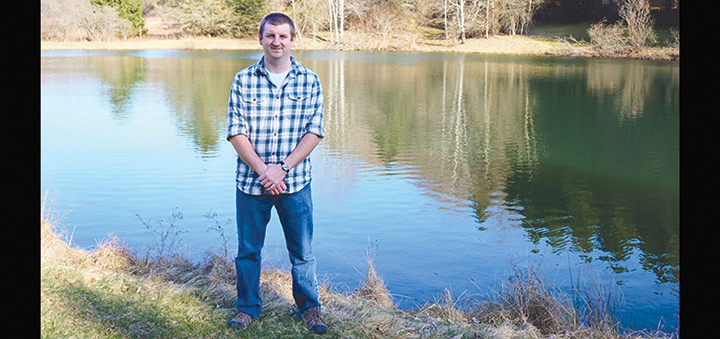
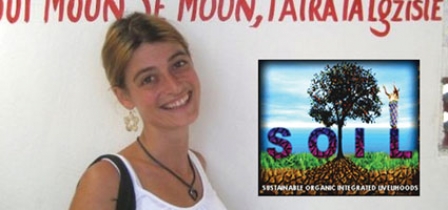
In the heart of the year’s most tragic story is Sasha Kramer, Ph.D., 34 and daughter of Jeffrey and Pat Kramer. She is the executive director of Sustainable Organic Livelihoods, or SOIL, as its called. In one of numerous media accounts about her work, Kramer and SOIL were recently highlighted in an article in The New York Times as offering “a solution” to sanitation needs in Haiti. What’s more, the organization was recently visited by a troupe of filmmakers who are making a documentary due out in early January.
The Chenango County community will have an opportunity to hear Sasha’s first-hand account of the misery of countless thousands of Haitians living in inadequate housing and tent camps and to learn more about her not-for-profit organization at 7 p.m., Monday at the Guernsey Memorial Library in Norwich.
Sasha Kramer said her father, who is a retired ophthalmologist, opened her eyes to international work when she accompanied him on medical outreach trips to Brazil and Mexico. While she knew she was destined to become a human rights advocate, she said she had no idea that her work would eventually involve toilets.
In short, what took Kramer to Haiti was the overthrow and forced exile of Haiti’s President Jean-Bertrand Aristide in 2004.
“I went to Haiti to see for my own eyes what had happened. I observed a peaceful demonstration, and, while I was there, I fell in love with the country. I came back 12 times during graduate school, and moved after I finished. I got interested in sanitation when not being able to find a toilet,” she said.
In a country with no treated water or sanitation infrastructure, SOIL is able to provide dry composting toilets that turn human waste into fertilizer. The composting kills the cholera bacteria and other pathogens within a few days, and results in desperately needed topsoil and fertilizer to boost agricultural production. SOIL has built more than 200 composting toilets for displacement camps, communities and schools throughout Port Au Prince since the earthquake destroyed the city.
Readers of The Evening Sun followed a weekly account of the medical problems in Haiti earlier this year from Norwich physician, Dr. Tom Holmes, who also made it his mission to volunteer after the earthquake. Holmes described the scene when Kramer’s dry composting toilet was inaugurated in the medical tent camp where he worked: