NORWICH – Businesses need to be prepared for the fundamental changes coming down the pike as a result of federal health care reform, according to an expert from a state-wide business trade organization.
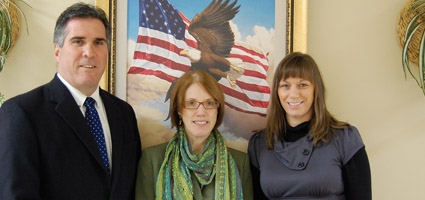
Maggie Moree, director of federal affairs for the New York Business Council, imparted this wisdom to local business professionals during the latest Commerce Chenango’s “Good Morning, Chenango” breakfast. The event, held yesterday at the American Legion in Norwich, was sponsored by Mang Insurance. The topic of Moree’s presentation was “Translating Federal Health Care Reform.”
Moree’s first recommendation was that, while many parts of the health care reform bill won’t kick in until 2014, businesses should start planning now.
“This bill in large part is a planning document,” she said.
Because of the punitive nature of penalties, businesses shouldn’t try to go it alone, either. She recommended that owners who don’t already have “tight relationships” with their insurance broker, accountant and lawyers, consider strengthening those ties.
Despite a swing in the balance of power in the House of Representatives, businesses shouldn’t expect sweeping repeals of the provisions in the bill, according to Moree. Even if portions of the legislation are repealed, New York is unlikely to see the “dramatic changes” other states might experience, she said, as many of the coverage mandates and “menu” of Medicaid services already exist here.
She grudgingly complimented the bill as an example of “shrewd” policy-making, since it is “front-loaded” with benefits to consumers.
Moree reported that the cost of health insurance continues to be the number one concern of the thousands of businesses on whose behalf the Business Council advocates. While the primary objectives of the health care bill were to both increase access to health care and “to bend the cost curve,” the actual legislation focused on the former, without really addressing the latter.
“That’s a big problem for business,” she said.
In fact, it appears that the costs to businesses will likely increase as a result of many of the changes included in the reform bill. A portion of that increase will be the result of federal taxes on private insurance which will create what Moree called “hidden revenue streams” for the federal government. This is on top of the state taxes, which already make up 10 to 12 percent of premiums.
“It actually exceeds the corporate franchise tax in New York,” she said. Only a portion of the money raised through this tax fund health-related initiatives, she added. “The bulk of the money gets swept into the state’s general fund.”