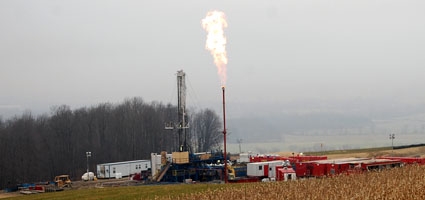
SMYRNA – The Davis Farm in Smyrna was the scene of a roaring sound and bursts of flame that shot up several stories into the air yesterday morning as Norse Energy Inc. conducted a routine natural gas well flare.
The flickering flame from the end of a long narrow exhaust pipe could be seen far above a corn field and local observers heard an immense roaring sound that echoed. An unidentified caller to The Evening Sun said it was “quite dramatic, quite loud.”
But it’s a scene familiar to those working in the gas well drilling industry, and all part of the regular process that helps control gas pressure and burn off possible air contaminants.
According to Norse Energy spokesman Dennis Holbrook, a flare occurs when a crew strikes a gas reserve for the first time and can last between a few hours or days.
“When we’re out drilling at a site, we try to complete the task in about a two week period, to minimize our presence,” said Holbrook. He said crews usually encounter subterranean gas reserves four to five days after they begin work at a site and then the well will initially flare up.
“So you’re looking at about a 15 day work period where four to five days into that process you’d encounter an initial flare for up to a day or two and then maybe a few smaller flare-ups after that, but nothing like the initial event,” said Holbrook.
Such an event took place Monday at around 10 a.m. at the Davis Farm in Smyrna when crews hit their initial gas pocket. The discovery caused a controlled flare to ignite and drew the attention of area residents.