NORWICH – Greene businessman Enzo Olivieri warns that a moratorium on natural gas drilling in New York would kill everyone’s hopes for new jobs, and the anti-drillers pushing for it will ultimately succeed because they have deeper pockets.
“That’s what it all boils down to. They, who for the most part come from downstate, have more money than we do up here, so they’re more powerful,” he said.
Olivieri’s exasperation was recently relayed in a phone call to The Evening Sun after the New York State Senate voted Aug. 3 to impose a nine-month moratorium on the controversial high water volume horizontal drilling technique, called hydraulic fracturing. The restaurant owner and real estate developer said he fears that the promise of economic recovery in the area and throughout upstate New York may now simply “wash downstate along with the region’s water.”
Referring to New York City-based protesters who want to ban drilling, he said, “They are the first to use our resources, our water and our crops, and not pay the adequate amount for it. Now they want to take our jobs away?”
It’s been a tough month for both landowners and the oil and gas corporations wanting to do business in New York. From the Chenango County Office Building in Norwich to the state’s capital in Albany, anti-drilling protesters have come out in droves to ride the wake of the senate’s moratorium and also to take credit for causing an U.S. Environmental Protection Agency hearing on the safety of hydraulic fracturing in nearby Binghamton to be postponed.
The federal study is being conducted along with New York’s own environmental review. (The latter is more than two years in the making and expected to be completed by year’s end.) And in Chenango County, activists are calling for the local government to join other counties that have already banned drilling until the EPA finishes, which some say could take from two to four years.
Chenango County Farm Bureau President Bradd Vickers, who has been an unbiased guest on many an educational seminar and radio broadcast held in New York this year, said he doesn’t want to think about how long it might take the EPA to decide whether hydraulic fracturing should be regulated by the federal government’s Safe Drinking Water Act rather than by state regulators.
“I hate to even think about it. It’s not just the farmers going under. At some point, you just have to move forward. ... You have to think about our local supply of food,” he said.
Vickers represents the sentiments of farmers on both sides of this issue and other issues that link energy and agriculture.
“You have environmentalists who want to get away from petroleum products, but don’t want wind generators on Long Island, or for farmers to sell their corn for ethanol instead of food. If not natural gas, so what’s the solution? Are we going to go back to the old high power line plans?” he asked in a reference to the New York Regional Interconnect high powered line that was proposed through Chenango County back in 2007.
“I hate to think of agriculture depending on income from natural gas, but for the economy in our area, that’s a potential loss.”
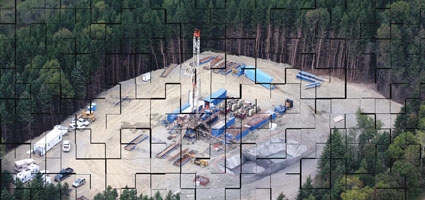
The president of the state’s largest pro-drill landowner coalition, which happens to be based in Norwich and Oxford, said many of the critiques on the horizontal drilling technique are caused by misinformation. The suggestion, for example, that drilling would create an industrial landscape that would deter hunting and fishing tourism, is inaccurate, Brian Conover said. One just has to try and search for the 15 wells already drilled in the Town of Smyrna to find out why.
“They’re all within a two-mile radius, but good luck even finding them. It’s not the size of a huge shopping mall like everyone is suggesting. They are so tiny that I could only find four of them,” Conover said.
“Look at the electrical wires that cut up the hills and the electrical plant on Hale Street in Norwich. This (natural gas drilling) is not the eyesore that we currently have in the countryside,” he added.
Conover agrees that the two sides combating each other aren’t on a level playing field monetarily. He said those against drilling are “extremely flexible, and have a lot of money to spread sensationalism and misinformation.”
Erin Heaton, a landowner in Norwich who is affiliated with drilling protesters, told Chenango County lawmakers this month that natural gas extraction “poses a very substantial risk to clean, safe drinking water.” She punctuated her request for a moratorium with reports of diesel spills at well sites, fracking chemical spills, well explosions and pipeline leaks reported in Pennsylvania and elsewhere where drilling for natural gas has been ongoing.
“In the rush to boost the county’s economic picture, let us not be the first to learn the tough lessons of natural gas extraction here in New York State. Instead, why not wait and be sure you can truly move ahead in a safe, responsible manner?” she suggested.
Peter Hudiburg of South Plymouth, who accompanied Heaton and others to meetings this month, said a worldwide shortage of potable water should be enough of a deterrent to hydraulic fracturing.











