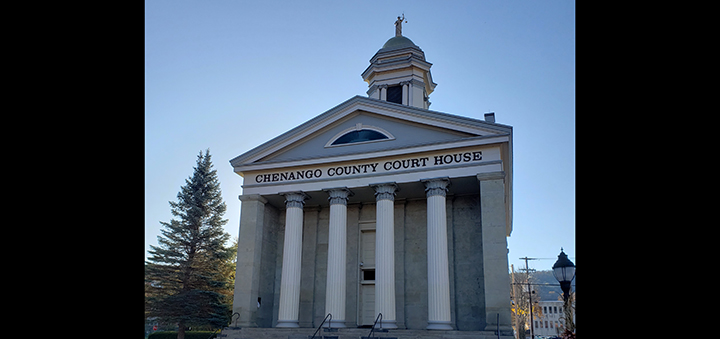
NORWICH – A revised fee schedule for building and fire code permits is having a tough time making its way through Chenango County’s government committee system.
The schedule, created in 2005, needs to be updated in order for the public health department to receive state aid for codes enforcement. It would also help afford employees’ salaries and costs in the department.
“Obviously with state budget problems, there’s no money flowing now, but this would put us in the position to be eligible for that state aid,” said the county’s Public Health Director Marcas Flindt.
The cost of providing building and fire code enforcement has become a burden on Chenango County taxpayers, with the local share increasing 58 percent from last year. Revenues have been cut in half since 2007, mostly due to the faltering economy. The department was also forced to cut staff after the Town of Norwich last year joined the Town of Greene and a handful of other municipalities that handle their own enforcement.
The revised fee schedule would raise the permit for a 1,500 square foot, single family home from $200 to $250, and a 2,501 square foot to 3,500 square foot home from $300 to $350, for example. Permits for storage sheds larger than 280 square feet would be increased from $50 to $100.
Flindt and Chenango County Code Enforcement Officer Dick Platt described the increases as “very reasonable.”
Even though his town doesn’t have to abide by the county’s fee schedule, Town of Norwich Supervisor David C. Law took exception to the higher rates. Doing so would be “unfair to the people with the economy the way it is,” he said.
Law objected, in particular, to the fee for premanufactured storage sheds, and successfully led members of the Safety and Rules Committee earlier this month to table action on the entire schedule.
Law also suggested that the county health department inspect restaurants every two years rather than annually.
“We are taxing people to death,” he said.
Law said his town board plans to waive fees for storage sheds altogether.
“The next thing is your assessor will charge you for it, on top of your assessment, and you will pay for it forever,” he said.
The committee asked Platt to research other counties’ specifications and permit fees for sheds.
“Why does someone have to pay for something that’s on skids? It’s already been built to spec by the manufacturer,” Law said.