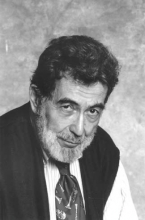
The “media frenzy” – as President Obama called it – over Sgt. James Crowley’s arrest of Harvard professor Henry Louis Gates Jr. needs to become more than a “teachable moment,” in the president’s phrase. But not only about interactions among blacks and white police. Widely overlooked in this frenzy is a constitutional lesson. Is there a law forbidding angry nonviolent speech directed at a police officer?
John Timoney, Miami’s police chief, is a hard-line, law-and-order cop whom I’ve criticized for his mass arrest of nonviolent protesters – when he was police chief in Philadelphia – without a flicker of probable cause. But I respect what he told Maureen Dowd of The New York Times (July 26) about Gates’ arrest:
“There’s a fine line between disorderly conduct and freedom of speech. It can get tough out there, but I tell my officers, ‘Don’t make matters worse by throwing handcuffs on someone. Bite your tongue ...’”
Moreover, as Ronald Hampton, executive director of the National Black Police Association, said after the handcuffing of Henry Louis Gates: “Black men’s experience with law enforcement in this country is very different than that experience of whites” (National Public Radio, July 24).
In July of last year, a New York Times/CBS News poll asked: “Have you ever felt you were stopped by the police just because of your race or ethnic background?” Yes, said 66 percent of black men. Also responding affirmatively were 9 percent of white men (New York Times, July 24).
But what about this particular arrest, which has ignited a continuing national debate? The Massachusetts American Civil Liberties Union affiliate reminds us (Slate.com, July 22) claiming racial bias while protesting an arrest is political speech, the core of the First Amendment – and exercising political speech is not disorderly conduct. That was the crime that Gates was charged with when arrested. The Cambridge Police Department, while standing behind Crowley, dropped that charge in the national gust of publicity, and also, I believe, the department knew it would not stand up in court.
Almost lost in the frenzy was Atlanta police officer M. Tate (he wouldn’t give his first name) who told the New York Times (July 24) how his police department has trained him not to lose his cool when subjected to angry name-calling. An arrest he said is justified when:
“The set of circumstances ... will lead a reasonable and prudent person to believe that a crime has or is about to be committed and that the person in question is involved in a significant manner.” Handcuffs are not warranted, he added, by anything short of that.
Yet Gates’ arresting officer, Crowley, has – for the past five years – been training officers at the Lowell Police Academy in how not to engage in racial profiling. But by the time he handcuffed Gates in Cambridge, Crowley knew Gates was in his own house and there was no burglary in progress. If Crowley wasn’t racially profiling Gates – as the professor believes he was (New York Daily News, July 25, lead editorial) – then he busted him for political speech.
The sergeant needs more training.
Bob Herbert reports (New York Times, Aug. 1) only five or six minutes elapsed between police alert to a possible break-in and the handcuffing of nonviolent Gates.
What was Crowley teaching the Lowell police?
While Obama has been criticized for increasing the media frenzy by charging that Crowley acted “stupidly” (a word he has recanted), the president did otherwise make sense:











