The ongoing efforts to “re-invent” conservation priorities within the Department of Environmental Conservation will no doubt prove to be an uphill battle due to the huge deficit New York is facing. As reported last week, the decline in conservation quality and services negatively impacts all stakeholders, regardless of their interests or need to purchase a yearly license.
I suspect the State will use the deficit to continue shearing conservation programs across the board and also as a crutch to implement higher license fees for next year. Already DEC has said it will need to close several state camping facilities due to the red ink. The biggest issue is how valuable are the state’s natural resources as they relate to generating income, whether for the Conservation Fund or the General Fund? Certainly reductions in these programs will take their toll on tourism and the many NY businesses that depend on them for survival. Accepted estimates of what the state’s natural resources activities generate in cold hard cash is roughly $60B annually, and in some areas represents their biggest business income each year.
During a February 11 stakeholders meeting with DEC in Albany, Commissioner Grannis was asked about funding as it related to how much income it generated for the state. His answer was, “All areas in government are being cut despite what (money) they create.” Yikes! Wouldn’t I love having this man run a business for me – let’s cut the ones that are making us money. Boy, does that ever make a lot of business sense.
I suspect that because so few of our elected and appointed officials are experienced in sound natural resource management or running a business, they don’t have a clue of the tremendous fiscal value they represent to the state’s economy. Just consider the personnel in charge of running the DEC, Both its commissioner Pete Grannis and his eco-dedicated sidekick, Judith Enck are basically urbanites with no natural resource background skills or training, nor any particular interest in anything beyond the environmental and money applications of the department.
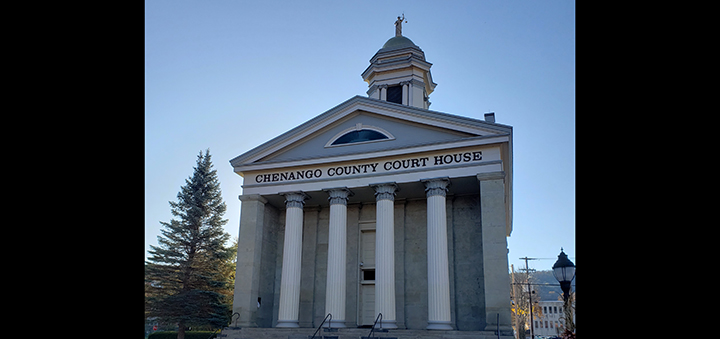
Take for example, what state forestlands could be worth in tourism dollars in counties like Chenango IF they were managed properly with that in mind. Whether the activities involved hiking, nature watching, hunting and fishing, cross-country skiing, snowshoeing, snowmobiling, photography, or whatever, all that publicly owned acreage could potentially generate major income … to the immediate area as well as to the State coffers. So what’s Albany’s answer? Cut the state tax rate paid to the towns involved while basically doing little or nothing to manage or improve these valuable resources. The economic tax impact this will have on local towns such as Pharsalia, McDonough, German, Smithville and Brookfield could be devastating.