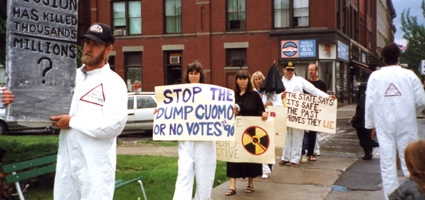
SOUTH OTSELIC – In 1988, the small South Otselic School District became embroiled in a heated battle with the state over the location of a low level radioactive waste facility. Now more than 20 years later, students are working to document the actions of the community and the role they played in preventing the facilities from being located in New York.
Students in Michael Foor-Pessin’s communications class started working on the project about three weeks ago. Foor-Pessin explained he decided to present the project to his students after talking with former school librarian Joyce Church. Church had been looking at a section of the school’s web site about the history of the area and couldn’t find any information about the radioactive waste facility or the protests that prevented it. “She wanted to know why there was no information on one of the most important things the school had done in recent history,” Foor-Pessin said. After giving it some thought, he decided to present it as a project for his communications class and see what skills they could take from it. Foor-Pessin teamed up with school librarian Sue LeBlanc who is helping with research and technology for the project.
In a statement released by the class, students explained that in 1988 areas in the towns of Otselic, Pharsalia, and Plymouth in Chenango County as well as Taylor in neighboring Cortland County were being examined as possible locations for low level radioactive waste sites. “Our ultimate research goal this semester is to conduct the necessary research so that we can produce a documentary film that chronicles the events as they unfolded,” the students said in the statement.
To do that, the students have done extensive Internet research. They will be taking a trip to Guernsey Memorial Library to examine newspaper archives from the time, and they plan to hold an open house from 9 a.m. to noon on Saturday, March 21 at the high school. Anyone with information or memories of the protests is invited to attend the event and bring their photos or memorabilia from the time.
While many communities in Chenango County organized against the proposed waste facilities, the communications class is focusing on the actions of those in the district. “We want to document OV’s contribution to this. The story of people here and what they did,” Foor-Pessin said. Most amazing to the teacher were the actions of the district administrators at the time who supported the protest movement. “There was a demonstration in Albany on April 29, 1989, and the school actually bussed students to the protest,” Foor-Pessin said. “How many superintendents would bus students to Albany today to protest the budget cuts?”
The 10 students in the course said until they began this project, they had no idea that these events had taken place so close to home. In addition to learning skills in research, technology, organization and interviewing, the students are also learning about the history of their area and the potential danger that could have been caused by locating a waste site there.
Senior Tyler Davis said he had learned what a bad idea locating the site in this area would have been. “[The state Siting Commission] guaranteed the waste wouldn’t leak, but if it had leaked, even a little, it would have gotten into the water table, which runs through Pennsylvania to the Chesapeake Bay,” Davis said.