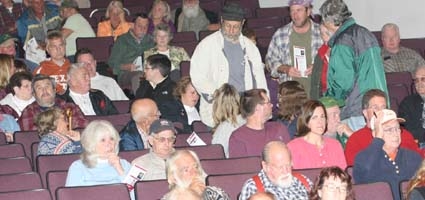
NORWICH – On Wednesday, a crowd of about 100 landowners asked a forum of state legislators multiple questions regarding leasing practices and environmental threats posed by the burgeoning natural gas industry in Chenango County.
Though many weren’t fully answered, the questions weren’t anything new. The officials said they have been bombarded by multiple calls from constituents across the Southern Tier regarding natural gas issues on a weekly, if not daily basis.
Three representatives from New York State Attorney General Andrew Cuomo’s office, sponsors of the event, said they have had to come up to speed quickly on the issues surrounding drilling. Assistant Attorney General Michael Donaher said he didn’t pretend to have all of the details.
“Fifteen to 20 years ago, oil and land leases were all about landowners making a little extra cash. They never signed with the belief that wells would actually be drilled. ... Nobody could have projected what you could see in the future in terms of the royalties and bonuses being offered now. I certainly didn’t have any idea these increases would have occurred.”
In less than 10 years, production of natural gas in New York State has more than tripled. Back in 2003, the state’s annual income from natural gas wells was $232 million with an estimated $29 million filling landowners’ pockets. In 2006, $414 million came into the state and $52 million went to property owners, mostly in Southern Tier.
The action began with successful finds in the Trenton Black River formation in Chemung and Stueben counties. Today, natural gas companies in the area such as Nornew, Inc. and Chesapeake of Appalachia, are targeting not only the widely-acclaimed Marcellus Shale formation, but also the Oneida and Herkimer formations. Bonus prices have increased from single digits to upwards of $2,500 per acre and royalties have continued to inch up past the traditional 12.5 percent mark that New York has traditionally accepted for state lands.
Some property owners are calling for legislators to raise the threshold on stateland drilling leases from 12.5 percent to 18 or even 25 percent in royalties.
Dennis McCabe, Cuomo’s assistant for the Binghamton region, said the good news - significant revenues for companies and landowners and the development of a highly desired alternative energy source - has a flipside.
“The bad news has been misleading, abuses and fraudulent leasing tactics on the part of landmen,” he said.
McCabe said the AG’s office is developing a “standards of practice” agreement for gas companies to follow, with landowners’ rights considered from a consumer protection standard.
“We are here to protect landowners and making sure they understand their rights during the leasing process,” he said.
McCabe was joined by New York State Assemblymen Clifford Crouch, Gary Finch and Peter Lopez at the event held in the Norwich High School auditorium. Chenango County Farm Bureau President Bradd Vickers gave a power point presentation depicting horizontal drilling and answered the majority of questions posed by the audience.
The panel defined and explained leasing terms and clauses, compulsory integration, pipeline easements, and asked all in attendance to hire an attorney before entering into any agreements with landmen.
Several members of the audience called for more emphasis on conservation and less on the urgent need for natural gas. Crouch said while the state “is not backing away from conservation,” drilling is part of “ending our dependence on foreign oil.”
“Our economy has to be sustainable as does our environment,” Lopez said.
Others asked why the mix of chemicals that some companies use to drill horizontally into shale formations is kept confidential. They asked why the AG’s office doesn’t require companies to disclose the chemicals to the public as well as drilling mishaps that, they say, have occurred in some Western states.