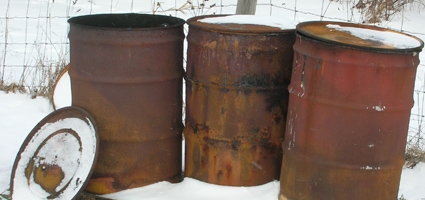
NORWICH – A potential ban on certain open fires could inconvenience rural residents who’ve grown accustomed to using burn barrels for getting rid of waste material.
The New York State Department of Environmental Conservation is considering extending its air quality rules to make burning rubbish - which includes paper, plastic, leaves and brush - illegal statewide. Currently, such burning is only allowed in towns with populations less than 20,000.
No final decision on the regulation has been finalized yet, a DEC spokeswoman said Wednesday.
Alan Franklin, of Inman Road in the Town of Plymouth, said he uses his burn barrel roughly two to three times a week.
“I think you should be able to burn your papers or brush out back,” said Franklin, adding that if the regulation were passed, there would likely be an impact on him personally. “It’d make a difference. I burn quite a bit of brush and papers.”
If approved, the regulation would allow for small campfires and cooking fires, ceremonial fires, certain types of agricultural waste burning, petroleum-fueled smudge pots, fire training exercises, disposal of hazardous materials by police and controlled burns for forest maintenance.
On outdoor waste burning, Chenango County Environmental Management Council Chairman Bob McNitt welcomes the new ban, citing that waste is different today than it was when burning was commonly accepted in the past.
“We’re talking about a lot of different chemicals and hazardous materials being emitted into the air, more today than when people in the country were burning 40, 50 or 60 years ago,” said McNitt, pointing to dioxin, a documented byproduct of waste burning that reportedly affects people’s respiratory systems and can cause other health problems, as well as other harmful particulate matter emitted from burning paper and plastic. “It’s a real problem.”
Based on a study the council recently conducted, McNitt estimates that about half of the county’s rural residents have burn barrels. Combined with agricultural waste burning, McNitt believes harmful materials make their way into food supplies, something that affects everyone.
Studies offered by the DEC and U.S. Environmental Protection Agency show that dioxin emitted from burn barrels can be harmful to people’s health.