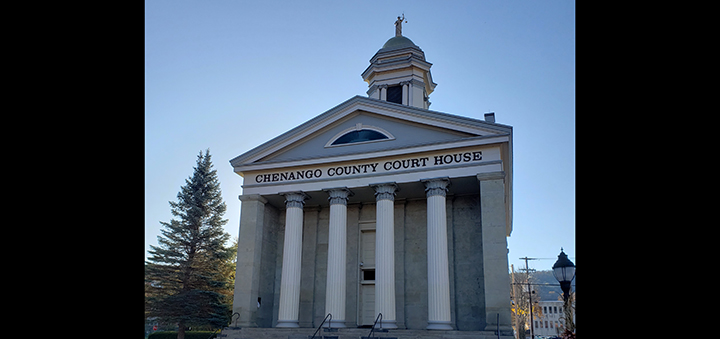
CHENANGO COUNTY – Last Friday, further progress on the 2007 Farm Bill ceased and the Senate’s Thanksgiving vacation started with Democrats and Republicans both arguing that the other can’t get any work done.
Considering the final vote on the bill was expected to happen last week, when the Senate resumes after its two-week break it’s likely there won’t be room in the schedule to consider the nation’s largest food-related legislation, meaning it will get pushed back with extensions until 2008.
Locally, the expansive farm bill and its delay will have an impact, Chenango County Farm Bureau President Bradd Vickers says.
“The sooner we can get it passed, the better,” said Vickers, explaining that delayed agriculture policies could impact how farmers plan, if nothing else. “We hoped that (the Senate failure to vote) wouldn’t happen ... but we’re optimistic that when they get back they’ll discuss their concerns, come up with solutions and pass it.”
Vickers expects that if the debate moves on into 2008 that the current legislation, last revised in 2002, will be extended.
As for the bill itself, Vickers says the Northeast has been given much more consideration than in years past.
“We’re better off this time around than we were last time around,” he said.
Funding for national nutrition programs, like food stamps, alternative energy initiatives, and stepped-up environmental conservation efforts are three components of the bill that will directly impact Chenango County farmers and consumers, Vickers said. For local dairy farmers, an extension and expansion of the Milk Income Loss Contract (MILC) – which pays back producers a percentage of the money they lose on milk when the price falls below $16.94 per hundred pounds – is arguably the most critical of the bill’s policies up for debate.
“MILC is has been quite a concern,” Vickers said. “There were some fears it wouldn’t happen.”
Often referred to as a “vital safety net,” there were questions in Congress regarding whether or not to keep the MILC program in place.
Area producers have mixed feelings about it.
Guilford dairy farmer Terry Ives says the program helped many local farmers keep afloat when milk prices tanked in 2006.
“It’s definitely a help here,” said Ives. “It doesn’t provide for any added frills, but it helped a lot people make up some of what they lost and cover more of their bills when milk prices were down.”