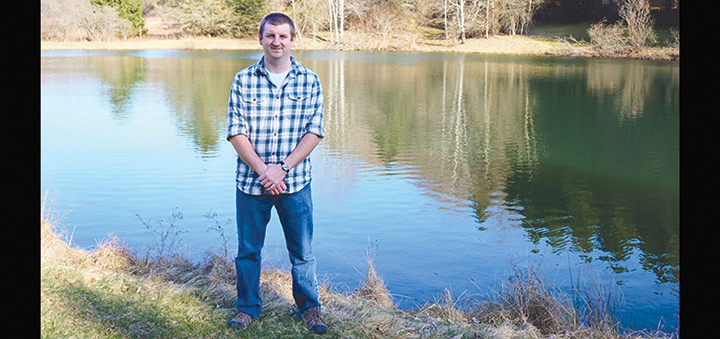
CHENANGO COUNTY – When asked what their family does to remedy the steadily low milk prices, high fuel costs and the recent string of rough weather, Sherburne dairy farmers Peter and Brenda Lathrop said they work on a 48-hour clock.
“Everybody’s trying to find something that will make things click,” Peter said. “Everybody has to find a happy medium.” The Lathrops said they’ve found ways to cut costs, such as fixing their own equipment, mixing their own feed, and working longer hours. But they’re also the first ones to admit that keeping the 48-hour clock is a pace they won’t be able to sustain permanently. “You’re going to get burned out,” he said.
Keith Campbell, a dairy farmer in Greene, said he supplements his income by shaving cow’s hooves for other farms, and admits seeing families on a daily basis who are often worse off than his.
“It rips my heart to see these other farm families because they don’t have the money,” Campbell said. “They know they don’t have the money.”
From opposite ends of Chenango County, Campbell and the Lathrops have different ideas about what the future holds for farmers, and what the answers to their problems are. But both agree that getting the public familiar with agriculture, and getting them to believe in the local farmer again, will be their deliverance from disaster.
“Even if the price of milk goes up, it won’t fix everything,” Brenda said. “We have to educate the public, we have to get consumption up. We have to dispel the myths – there is a lot of benefits that everyone will see out of it.”
“Right now there is just not enough of us,” Campbell said, referring not only to the actual number of farmers, but also the relational distance between them and the rest of society, a gap he said has increased over the years. “That’s exactly what’s happening.”
All three explained how in just a few generations, residents of rural communities in Chenango County have become completely disassociated with the economic backbone of this area, where as in the past, non-farmers still understood and had ties with the industry. The Lathrops described one instance where some middle schoolers from Sherburne-Earlville took a tour behind their farm near the Rogers Conservation Center, and some of the students were only seeing corn in the field for the first time.